The Quiet Revolution Happening in Dark Theaters
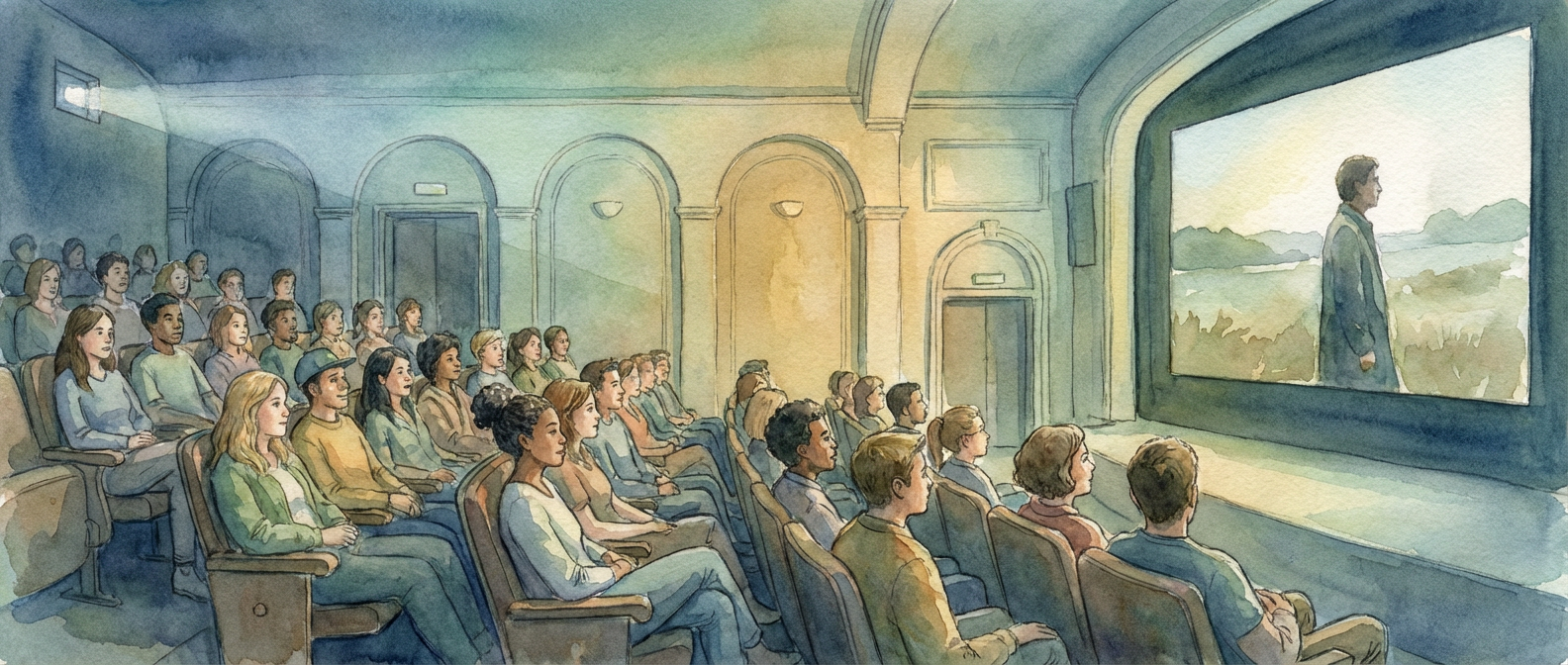
There’s something almost surreal about standing in line at Metrograph on a Friday night in January 2026 and realizing you’re surrounded by people under thirty who are genuinely excited about watching a six-hour Chantal Akerman retrospective. Not ironically excited. Actually, genuinely, the-kind-of-thing-you-text-your-friends-about excited. Three consecutive weekend marathons sold out completely, with over 1,800 tickets moving across those dates alone. That’s not a niche anymore. That’s a movement.

What started as whispers on film Twitter and Letterboxd comments has become something tangible you can feel in the theaters themselves. Young people are filling seats for slow cinema screenings the way previous generations filled them for blockbuster premieres. They’re sitting through films where single shots linger for forty-five seconds, sometimes minutes, where narrative takes a backseat to atmosphere and duration becomes part of the meaning. The streaming data backs this up too: between 2024 and 2025, viewers aged 18 to 28 increased their consumption of films with shot lengths exceeding fifteen seconds by 45 percent on major platforms like Criterion Channel. That’s not a statistical blip. That’s a genuine shift in what people actually want to watch.

How Streaming Paradoxically Created Cinephiles
Here’s the thing nobody predicted: the same technology that was supposedly killing cinema turned out to be the gateway drug for it. Criterion Channel’s editorial on the slow cinema surge noted that young subscribers were using the platform not as a convenience replacement for theaters, but as a training ground. They’d watch a Tarkovsky film at home, develop an appetite for it, then show up in person for the full experience. Streaming gave them access to a canon that would have been impossible to encounter a decade ago without significant geographic privilege or serious film school connections.
What happened next is almost predictable in hindsight: once you’ve spent an evening with Andrei Rublev’s three-hour meditation on image-making and faith, you want to experience that on a theater screen where your phone can’t interrupt, where you can’t pause to check your notifications, where the only option is surrender. The streamers became the appetizer for the arthouse theater main course. Theaters, which had been slowly losing younger audiences, suddenly found themselves with a very specific and very dedicated crowd.
The Science of Slowing Down
What’s fascinating is that this isn’t just aesthetic preference anymore. There’s actual measurable data showing what happens to your nervous system when you watch slow cinema. A study published in late 2025 in Projections: The Journal for Movies and Mind found something striking: viewers who watched films built on extended takes and minimal editing showed noticeably lower cortisol levels after screening compared to people who’d just finished action films. That’s not a metaphor. That’s a literal physiological difference in stress hormones.
For a generation dealing with endless notifications, algorithmic feeds designed to maximize engagement, and content engineered to hit your dopamine receptors as hard and fast as possible, slow cinema functions almost like a counterculture practice. It’s a form of temporal resistance. Watching a Chantal Akerman film isn’t just watching a film. It’s an active choice to slow your thinking, to resist the pace that everything else in your life is demanding. That’s why young people talk about it the way people used to talk about meditation retreats or yoga classes. It genuinely changes how you feel.
The Global Theater Awakening
This isn’t happening in a vacuum. London’s BFI Southbank saw its 2025 Tarkovsky retrospective become its highest-attended series since 2019. Over 6,400 people came through their doors across three weeks specifically to sit with Stalker and Mirror and The Sacrifice. BFI’s 2025 repertory programming report detailed how their slower, more contemplative programming started attracting younger audiences in waves they hadn’t anticipated. The theater world noticed. They started programming more deliberately in this direction.
Then February 2026 happened. A viral hashtag called the slow film challenge started circulating across social media, asking people to commit to watching one canonically slow film per week for a month. What sounded like it might get a few thousand engagements turned into 2.1 million posts. Young people were actually sharing their viewing experiences of films shot with average takes longer than fifteen seconds, discussing them seriously, recommending them to friends, creating the kind of organic cultural conversation around art cinema that film institutions used to have to manufacture.
What This Moment Actually Means
The real story here isn’t just that young people are watching slow cinema. It’s about what that choice represents in the larger cultural picture. When you opt to spend three hours in a theater watching images that refuse to cut away, you’re making a statement about what you value. You’re saying your attention is sacred. You’re rejecting the idea that culture should be optimized for maximum digestibility. You’re claiming a kind of temporal autonomy that feels almost radical in 2026.
What’s happening in arthouse theaters right now feels less like a trend and more like the beginnings of a genuine cultural realignment. These aren’t ironic kids slumming it in difficult cinema for the aesthetic credibility. These are young people who genuinely believe that cinema is a space for thinking and feeling at a different register than what’s available anywhere else. They’re showing up for Akerman and Tarkovsky not despite the slowness but because of it. They’re bringing friends who’ve never seen work like this before. They’re talking about it. They’re building a culture around it.
If you’ve been paying attention to conversations happening in independent theaters and online film spaces, you’ve probably noticed it already. What do you think is driving this? Are you part of this shift, or watching it happen around you? The community discussing slow cinema online would probably love to hear what drew you in, or what keeps pushing you away. There’s a real conversation happening here about what cinema means to people right now.