
The Downtown Exodus and Its Cultural Aftershocks
Three years after the pandemic began its assault on urban life, the most visible scar isn’t found in empty storefronts or closed restaurants. It’s in the hollowed-out office towers that once anchored city centers. Remote work has permanently altered the geography of American productivity, with downtown office occupancy rates settling at roughly 70% of pre-2020 levels across major metropolitan areas. This isn’t temporary turbulence. It’s a fundamental rewiring of where work happens.
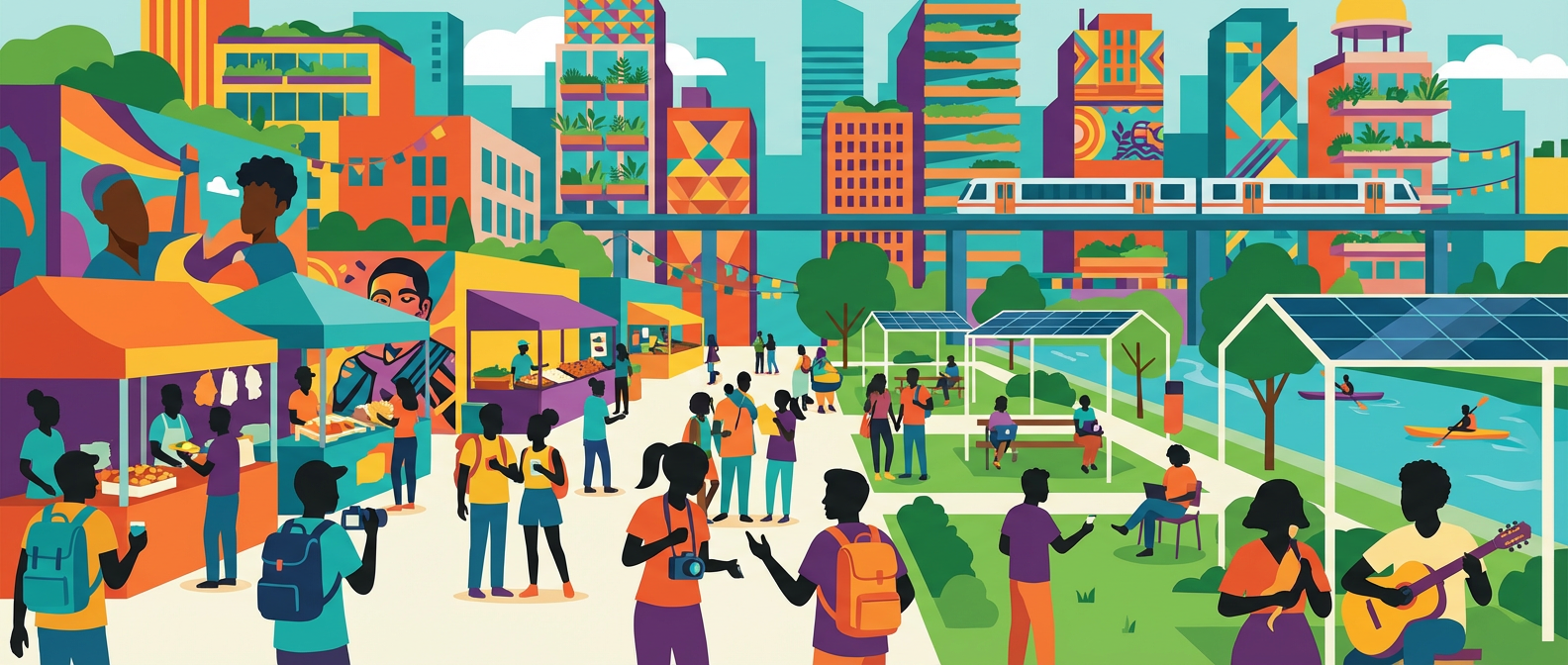
The cultural implications run deeper than lost lunch crowds. When office workers vanish, so does the ecosystem that supported them: the bookstores that survived on commuter traffic, the galleries that relied on after-work browsers, the performance venues that filled seats with downtown employees seeking evening entertainment. Cities built around the 9-to-5 rhythm suddenly find themselves operating on a completely different schedule.
This shift has forced urban planners to confront an uncomfortable truth: many American downtowns were cultural monocultures, dependent on a single economic driver. As CityLab urban culture coverage has documented extensively, cities are now scrambling to diversify their cultural programming beyond the commuter-focused model that dominated the past four decades.
The Institutional Collapse in Mid-Tier Markets
While major metropolitan areas absorbed pandemic closures and adapted, mid-size cities faced a more brutal reckoning. Cultural institutions that operated on thin margins before 2020 found themselves in impossible positions when earned revenue disappeared overnight. The result has been a wave of permanent closures that reshaped regional arts scenes in ways that won’t be fully understood for years.
Small museums, community theaters, and independent music venues that were cultural anchors for cities between 100,000 and 500,000 residents simply couldn’t weather extended closures followed by capacity restrictions. Unlike their counterparts in New York or Los Angeles, these institutions lacked the donor networks and municipal support systems necessary for survival. The closure of a single repertory theater or contemporary art space in these markets often meant the elimination of an entire artistic discipline from the local cultural conversation.
What’s emerging in their place is more distributed but less institutionally stable. Pop-up exhibitions in vacant retail spaces, outdoor concert series in parking lots, and artist collectives operating out of repurposed warehouses. This grassroots cultural activity is alive and responsive, but it lacks the programming consistency and professional development infrastructure that established institutions provided.
The Gentrification Acceleration and Creative Class Displacement
The pandemic’s economic disruptions created a paradox in urban housing markets. While some neighborhoods experienced population flight, others saw an influx of newly mobile creative professionals seeking lower-cost alternatives to expensive coastal cities. This migration pattern intensified existing gentrification pressures and sparked new debates about who gets to claim urban space.
The creative class that urban planners spent decades courting suddenly became viewed with suspicion in working-class neighborhoods where longtime residents faced displacement pressure. The arrival of remote workers with coastal salaries in previously affordable areas created cultural tensions that went beyond simple economics. Local music scenes, community gathering spaces, and informal cultural networks found themselves priced out alongside the residents they served.
These dynamics played out most dramatically in secondary cities that marketed themselves as creative havens during the pandemic. Places like Boise, Nashville, and Austin discovered that rapid cultural change could undermine the authentic local character that originally attracted newcomers. The challenge now facing urban leaders is supporting cultural energy without triggering the displacement cycles that have hollowed out artistic communities in more expensive markets.
Reimagining Urban Rhythms: Night Economy and Third Places
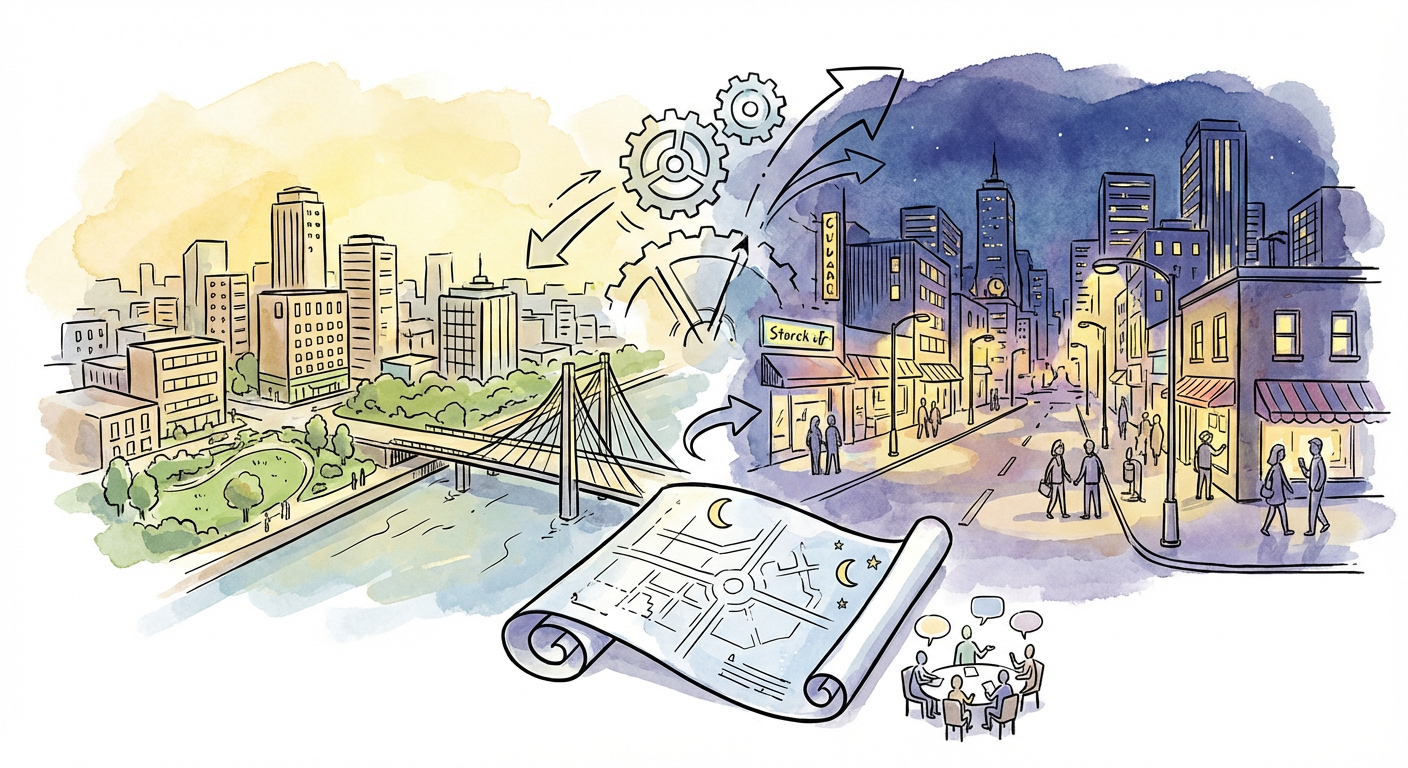
City governments are responding to these cultural shifts by expanding their policy focus beyond traditional daytime economic activity. Night-time economy initiatives have emerged as a central urban planning concern, with cities appointing “night mayors” and developing specialized policies to support after-dark cultural programming. This recognition that urban culture increasingly happens outside conventional business hours feels overdue.
The concept of “third places” has gained renewed attention from municipal planners who understand that cultural energy requires spaces beyond home and work. Coffee shops, libraries, and public parks are being reimagined as essential cultural infrastructure rather than amenities. Cities are investing in programming these spaces with activities designed to encourage community interaction and creative expression.
This shift reflects lessons learned during lockdowns about the importance of accessible, informal gathering spaces for community wellbeing. Curbed urban design analysis has highlighted how cities are retrofitting public spaces to support both planned cultural events and spontaneous social interaction, recognizing that urban culture emerges from both formal programming and organic community activity.
The Information Desert Challenge
Perhaps the most overlooked factor in post-pandemic urban culture is the collapse of local media coverage. More than 200 counties across the United States now lack any local news coverage whatsoever, creating information deserts that undermine community cohesion and cultural awareness. When local newspapers and radio stations disappear, so does much of the documentation and promotion that helps cultural scenes develop institutional memory and public recognition.
This media gap particularly affects emerging artists and grassroots cultural initiatives that rely on local coverage to build audiences and attract support. Without local arts journalists and community reporters, cultural activities become invisible beyond their immediate participants. The long-term effect is a fragmentation of urban cultural identity, as shared knowledge about local artistic activity disappears.
Cities are experimenting with publicly funded local journalism initiatives and community media projects, but these efforts remain small-scale relative to the scope of the problem. The challenge is rebuilding information infrastructure that can support cultural community development while remaining financially sustainable.
The transformation of urban culture continues to unfold in ways that resist easy categorization. What patterns are you observing in your own city’s cultural evolution since 2020? The most interesting developments often happen at the neighborhood level, where residents and artists are quietly creating new forms of community cultural expression that may define urban life for the next decade.