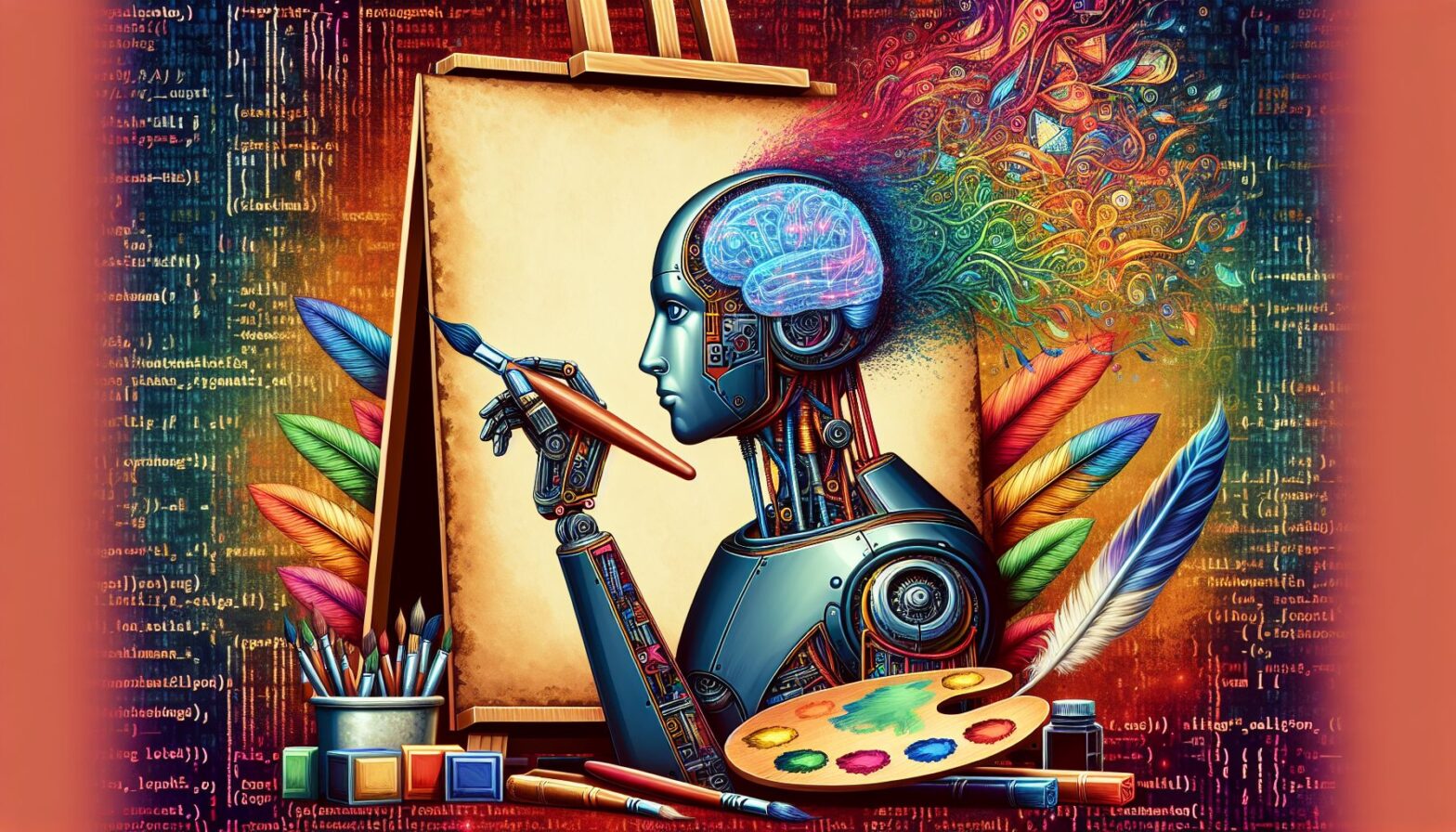
Hey fellow tech enthusiasts! If there’s one thing that keeps surprising me about the tech world, it’s watching AI move into creative spaces. I’ve been following how artificial intelligence is changing art and creative writing, and honestly, it’s both exciting and a little unsettling. We’re looking at stuff that we’ve always thought of as uniquely human territory. So let’s dig into this weird, fascinating collision between machine intelligence and creativity.
The Different Shades of AI Creativity
Sure, AI already handles automation and efficiency pretty well. But its move into creative work? That’s where things get really interesting. I’m talking about algorithms that can actually paint, create digital landscapes on command, and generate illustrations that look like they came from a human artist’s studio. It makes you wonder: is this art if it wasn’t made by human hands?
Companies like DeepArt, DALL-E from OpenAI, and ArtBreeder are changing how we think about digital art. These tools can create personalized artwork and generate images that would take traditional artists hours or days to complete. The results are often surprising, sometimes beautiful, and occasionally just plain weird. But they’re definitely challenging our assumptions about creativity.
AI in Creative Writing: Beyond Plagiarism Detectors
Now picture this: you’re writing a story with a collaborator who has read everything from Shakespeare to Toni Morrison to contemporary blogs. That’s essentially what working with AI writing tools feels like. It’s not science fiction anymore. These systems have absorbed massive amounts of text and can help generate stories, suggest plot twists, or even write entire chapters.
Tools like GPT-3 and other language models can take a simple prompt and spin it into complex narratives. Writers are using them to overcome writer’s block, explore different story directions, or collaborate on projects in ways that weren’t possible before. Some authors love the creative boost, while others worry about losing their authentic voice. I get both perspectives. The technology is impressive, but there’s something unsettling about a machine that can mimic human storytelling so convincingly.
Implications and Future Directions
This whole AI creativity thing raises some big questions that we’re still figuring out. Who owns the copyright to AI-generated art? What happens to human artists and writers when machines can produce similar work faster and cheaper? And maybe most importantly: does creativity require consciousness, or is it just pattern recognition and recombination?
I’ve been thinking about this a lot lately. On one hand, AI tools are democratizing creativity. Someone without traditional art training can now create visual art or get help writing stories. That’s genuinely exciting. But there’s also something lost when the struggle and personal experience that fuel great art get replaced by algorithmic efficiency. The tension between these possibilities and concerns is probably going to define how creative industries evolve over the next decade.
Conclusion: The Future of Creativity in the Age of AI
So where does this leave us? I think we’re in this weird transitional moment where AI and human creativity are learning to coexist. Some artists are embracing AI as a new tool, like painters who adopted digital software decades ago. Others are pushing back, insisting that authentic creativity requires human experience and emotion that machines can’t replicate. Both positions make sense to me. What’s clear is that the creative landscape is changing rapidly, and we’re all trying to figure out what that means for art, literature, and human expression. The conversation is just getting started, and honestly, I’m curious to see where it goes.